

Does Egg Help in Losing Weight?
Are you wondering if eggs can truly help you shed those extra pounds? You’re not alone. Millions of people worldwide search for answers about how to eat eggs for weight loss, whether egg salad is effective for dropping pounds, and how many boiled eggs should be consumed daily for optimal results.
The good news? Eggs are one of nature’s most powerful weight-loss foods when consumed correctly.
This comprehensive guide will reveal everything you need to know about using eggs to transform your body and achieve your weight loss goals in just weeks.
Whether you’re looking for high-protein egg salad recipes, wondering which part of the egg is best for weight loss, or trying to understand the difference between egg whites and whole eggs, this article has you covered with evidence-based information and practical recipes you can start using today.
Weight and Egg Quality: Understanding the Connection
Before diving into recipes and meal plans, it’s essential to understand how eggs influence your body weight and overall health.
Recent research has revealed fascinating insights into the relationship between egg consumption and weight management.
According to a comprehensive systematic review and meta-analysis published in 2023, consuming whole eggs has no significant adverse effect on body weight and composition in healthy adults.
However, the study discovered some important nuances.
The research found that egg consumption might increase body weight when consumed over longer periods (more than 12 weeks) and in individuals with chronic health conditions.
But here’s the exciting part: when eggs are consumed as part of a calorie-restricted diet by healthy individuals, they can actually support weight loss and improve body mass index.
| Study Duration | Participant Health Status | Effect on Body Weight | Effect on BMI |
|---|---|---|---|
| Less than 12 weeks | Healthy adults | No significant change | Decreased when combined with calorie restriction |
| 12 weeks or more | Healthy adults | Slight increase | May increase |
| Any duration | With chronic diseases | May increase | May increase |
| With calorie restriction | Healthy adults | Decreased | Significantly decreased |
Low Calorie Egg Salad: Higher Protein, Lower Fat
One of the most effective ways to use eggs for weight loss is through high-protein, low-calorie egg salad recipes.
Traditional egg salad can be calorie-dense due to mayonnaise and full egg yolks, but smart modifications can create a weight loss powerhouse.
The secret to creating the perfect healthy egg salad for weight loss lies in these strategic swaps:
Use Greek yogurt instead of mayonnaise:
Greek yogurt provides the same creamy texture with significantly fewer calories and more protein.
Plain non-fat Greek yogurt contains about 100 calories and 17 grams of protein per cup, compared to mayonnaise, which has approximately 1440 calories per cup.
Reduce egg yolks:
While egg yolks contain valuable nutrients, using a combination of whole eggs and additional egg whites can boost protein while reducing calories and fat.
For example, use 4 whole eggs plus 4 egg whites for your salad instead of 8 whole eggs.
Add volume with vegetables:
Chopped celery, onions, bell peppers, and fresh herbs add bulk, flavor, and nutrients without many calories.
These additions help you feel fuller while keeping calorie counts low.
A typical high-protein egg salad recipe for weight loss using 8 eggs (4 whole eggs and 4 whites only) provides approximately 273 calories with 22 grams of protein and only 19 grams of fat.
This makes it an excellent choice for lunch or a satisfying snack that keeps hunger at bay for hours.
Which Is Better: Egg Whites or Whole Eggs?
The choice between egg whites and whole eggs depends on your individual circumstances:
Choose Egg Whites If:
You need to maximize protein while minimizing calories and fat.
One egg white provides 17 calories and 4 grams of protein with zero fat and cholesterol.
This makes egg whites ideal for people on very strict calorie-controlled diets or those trying to increase protein intake significantly without adding calories.
You have been diagnosed with high cholesterol or cardiovascular disease.
If your doctor has recommended limiting dietary cholesterol, egg whites offer a safe alternative that still provides quality protein.
You are trying to lose a substantial amount of weight quickly.
The extremely low calorie content of egg whites can help create a larger calorie deficit when combined with vegetables and lean proteins.
Choose Whole Eggs If:
You want maximum nutrition from your food.
Egg yolks contain vitamins A, D, E, K, B12, folate, choline, and important antioxidants like lutein and zeaxanthin that support eye health.
You miss all of these by eating only whites.
You follow a generally healthy diet and have normal cholesterol levels.
Research shows that one to two whole eggs per day is perfectly safe and beneficial for most healthy adults.
You want better satiety and muscle building.
Studies from the University of Illinois found that whole eggs were significantly better for muscle building and repair compared to egg whites with equivalent protein content.
The nutrients in the yolk work synergistically with the protein for optimal results.
Nutritional Comparison: Egg Whites vs Whole Eggs
| Nutrient | One Egg White | One Whole Large Egg |
|---|---|---|
| Calories | 17 | 70-78 |
| Protein (g) | 3.6-4 | 6-7 |
| Fat (g) | 0 | 5 |
| Cholesterol (mg) | 0 | 186 |
| Vitamin D | None | Present |
| Vitamin B12 | Trace | Significant amount |
| Choline | None | Significant amount |
| Lutein and Zeaxanthin | None | Present |
Health Benefits: Eggs for Weight Management
| Benefit Category | How It Supports Weight Loss | Key Nutrients Responsible |
|---|---|---|
| High Satiety | Keeps you full longer, reducing overall calorie intake throughout the day | High-quality protein |
| Metabolism Boost | Increases thermic effect of food by 80-100 calories per day | Complete protein with all 9 essential amino acids |
| Muscle Preservation | Maintains muscle mass during weight loss, keeping metabolism high | Protein, vitamin D, B vitamins |
| Appetite Control | Reduces hunger hormones and increases fullness hormones | Protein stimulates GLP-1, peptide YY, cholecystokinin |
| Low Calorie Density | Provides substantial nutrition with minimal calories | Complete nutrient profile in 70-80 calories |
Egg Whites: Advantages and Considerations
| Advantages | Considerations |
|---|---|
| Extremely low in calories (17 per white) | Missing most vitamins and minerals found in yolk |
| Zero fat and cholesterol | Lower total protein compared to whole egg |
| Nearly pure protein source | No choline for brain health |
| Ideal for very high protein diets | No vitamin D, which many people are deficient in |
| Can increase protein without adding calories | May not provide same muscle-building benefits as whole eggs |
Whole Eggs: Complete Nutrition Package
Whole eggs provide an impressive array of nutrients that support not just weight loss, but overall health and well-being.
Here’s what makes whole eggs so valuable:
Brain Health and Cognitive Function: Whole eggs are one of the best dietary sources of choline, a nutrient critical for brain development, memory, and cognitive function.
One large egg provides about 147 mg of choline, which is roughly 27% of the daily recommended intake for women and 20% for men.
Eye Health Protection: The antioxidants lutein and zeaxanthin found exclusively in egg yolks protect against macular degeneration and cataracts.
These compounds accumulate in the retina and help filter harmful blue light.
Vitamin D for Bone and Immune Health: Eggs are one of the few natural food sources of vitamin D, with one whole egg providing about 6% of daily needs.
This is particularly important since vitamin D deficiency is widespread and affects metabolism and weight management.
B Vitamins for Energy: The yolk contains significant amounts of B vitamins, including B12, riboflavin, and folate, which are essential for energy production and fat metabolism.
Recent research comparing whole eggs to egg whites found that participants consuming whole eggs showed increased levels of beneficial nutrients like choline and betaine in their blood, supporting better metabolic health.
Egg Weight Loss Meals: Practical Ideas for Every Time of Day
Incorporating eggs into your daily meals doesn’t have to be boring.
Here are practical, delicious ways to use eggs throughout the day for maximum weight loss benefits:
What Type of Eggs Should I Eat to Lose Weight?
Not all eggs are created equal when it comes to nutrition.
Here’s what you need to know about choosing the best eggs for your weight loss journey:
Organic Free-Range Eggs:
These eggs come from chickens allowed to roam outdoors and eat their natural diet of insects, worms, and greens.
Research shows organic free-range eggs contain significantly more nutrients than conventional eggs, including higher levels of omega-3 fatty acids and vitamins.
You can identify quality eggs by their appearance.
Free-range eggs typically have harder shells and brighter, more vibrant yolks, indicating higher nutritional content.
The investment in quality eggs pays off in better nutrition and potentially better weight loss results.
Omega-3 Enriched Eggs:
These eggs come from hens fed a diet rich in omega-3 sources like flaxseed.
They contain 5-6 times more omega-3 fatty acids than regular eggs.
Omega-3s support heart health, reduce inflammation, and may aid weight loss by improving insulin sensitivity.
Conventional Eggs:
While still a good source of protein and nutrients, conventional eggs from caged hens typically have lower nutritional content.
However, they remain an affordable, healthy option if organic eggs aren’t in your budget.
The protein and vitamin content is still valuable for weight loss.
The most important factor isn’t necessarily the type of egg, but ensuring you healthily prepare them.
Even organic eggs can hinder weight loss if fried in excessive oil or butter.
The Effect of Whole Egg Consumption on Weight and Body Composition
A groundbreaking 2023 systematic review analyzed 32 clinical trials involving over 1,000 participants to understand how whole egg consumption affects body weight and composition in adults.
The comprehensive analysis revealed several key findings:
Overall Effect: Whole egg consumption had no significant negative effect on body weight, BMI, waist circumference, or fat-free mass in healthy adults when consumed in moderation (up to 12 eggs per week).
Short-Term Consumption (Under 12 Weeks): Studies lasting less than three months showed no significant changes in body weight.
This suggests eggs can be safely incorporated into weight loss diets for shorter interventions without concern about weight gain.
Long-Term Consumption (Over 12 Weeks): Studies extending beyond 12 weeks showed a slight increase in body weight and BMI, particularly in unhealthy individuals.
This highlights the importance of accounting for egg calories in your overall diet when consuming them long-term.
With Calorie Restriction: The most exciting finding is that whole egg consumption significantly decreased BMI and body weight when combined with a calorie-restricted diet.
This makes eggs an excellent food choice for active weight loss programs.
Energy Balance Matters: Studies where participants consumed eggs without adjusting their overall calorie intake saw increases in weight.
This emphasizes that while eggs are healthy, they still contain calories that must fit within your daily energy budget.
The research concluded that eggs can be a valuable part of weight loss efforts when consumed mindfully as part of a balanced, calorie-controlled diet.
How to Eat Eggs for Weight Loss in 2 Weeks
If you’re looking for fast results, a focused two-week egg-based eating plan can jumpstart your weight loss journey.
Here’s how to structure it safely and effectively:
| Week | Breakfast | Mid-Morning Snack | Lunch | Dinner | Key Focus |
|---|---|---|---|---|---|
| Week 1: Foundation Phase | 2 boiled or poached eggs with spinach, tomatoes, peppers, plus 1 slice whole grain toast | Green tea or black coffee (no snack) | 1-2 hard-boiled eggs in large salad with mixed greens, vegetables, lean protein, light vinaigrette | Lean protein (not eggs), vegetables, whole grains | Establish routine, stay hydrated with 8 glasses water daily, avoid late-night eating |
| Week 2: Intensification Phase | Egg muffins, veggie frittata, or shakshuka (2 eggs prepared differently each day) | 1 hard-boiled egg if hungry | High-protein egg salad with Greek yogurt, served with whole grain crackers or vegetable sticks | Grilled fish or chicken, large portion vegetables, quinoa or brown rice | Add 30-minute brisk walking daily, experiment with recipes, track progress |
How Many Boiled Eggs Should I Eat a Day to Lose Weight?
This is one of the most frequently asked questions about egg-based weight loss.
The answer depends on several factors, including your age, activity level, overall health, and weight loss goals.
For Healthy Adults: Most nutritionists and health organizations recommend consuming 1-3 eggs per day for weight loss.
This provides approximately 6-21 grams of protein and 70-240 calories, depending on how many you eat.
Research shows that eating 2 eggs for breakfast can be particularly effective for weight loss.
One study found that participants who ate eggs for breakfast lost 65% more weight than those who ate a bagel breakfast with equal calories when following a calorie-restricted diet.
For Active Individuals: If you exercise regularly or have high protein needs, you can safely consume 3-4 whole eggs per day.
Athletes and bodybuilders sometimes consume even more, often combining whole eggs with additional egg whites.
For People with Health Concerns: If you have high cholesterol, heart disease, or diabetes, consult your healthcare provider before increasing egg consumption.
You may be advised to limit intake to 3-4 whole eggs per week, supplementing with egg whites if you want more protein.
A good rule of thumb is to start with 2 boiled eggs daily and assess how you feel and how your weight loss progresses.
You can adjust based on your results and satiety levels.
Which Part of the Egg is Good for Weight Loss?
The debate between egg whites and yolks for weight loss isn’t as simple as picking one over the other.
Each part offers unique benefits:
Egg Whites for Maximum Protein, Minimum Calories:
If your primary goal is to maximize protein intake while keeping calories extremely low, egg whites are unbeatable.
With only 17 calories and 4 grams of protein per white, you can eat a large volume and feel full without consuming many calories.
Egg whites are ideal for people who need to eat very low-fat diets or who are trying to create a large calorie deficit quickly.
They’re also perfect for adding extra protein to meals without significantly increasing calories.
Egg Yolks for Nutrition and Satiety:
While higher in calories (about 55 calories per yolk), the yolk provides crucial nutrients that support overall health and actually help with long-term weight loss.
The healthy fats in yolks increase satiety, helping you feel full longer and reducing the likelihood of snacking between meals.
The vitamins and minerals in yolks also support metabolic health, energy production, and muscle function, all important for successful, sustainable weight loss.
The Best Approach:
For most people, a combination approach works best.
Use whole eggs for meals where you want maximum nutrition and satisfaction (like breakfast), and consider using primarily egg whites for meals where you want to boost protein without adding many calories (like lunch or snacks).
For example, make an omelet with 1 whole egg plus 2-3 egg whites.
This gives you the nutritional benefits of the yolk while keeping calories reasonable and protein high.
How to Cook Eggs for Weight Loss
The cooking method you choose can make a significant difference in how many calories your eggs contain and how effectively they support weight loss.
The Gold Standard: Low-Calorie Methods
- Boiling (Hard or Soft):
- Why: This is the healthiest method because it requires zero added fat or oil. Hard-boiled eggs are the ultimate “grab-and-go” protein snack.
- Pro Tip: Boil a dozen on Sunday. Keep them in the fridge for a quick, 70-calorie metabolism boost whenever you feel hungry.
- Poaching:
- Why: Like boiling, poaching uses only water. It creates a gourmet texture without any added fats.
- Pro Tip: Serve a poached egg over a bed of sautéed spinach or asparagus. The runny yolk acts as a natural, healthy “sauce” for your vegetables.
- Baking (Egg Muffins or Frittatas):
- Why: You can cook large batches at once using a non-stick silicone tray, which requires very little oil spray.
- Pro Tip: Fill 70% of the tin with fiber-rich vegetables (broccoli, peppers, onions) and 30% with eggs.
The “Healthy Swap” Methods
- The “Oil-Free” Scramble:
- The Old Way: Using a tablespoon of butter (100 calories).
- The Weight Loss Way: Use a high-quality non-stick pan and a tiny splash of water or low-sodium broth instead of oil. The steam helps keep the eggs fluffy.
- The “Volume” Omelet:
- The Strategy: Use 1 whole egg and 3 egg whites.
- Why: You get the nutrients and flavor from the one yolk, but the extra whites add massive amounts of protein for very few calories, keeping you full for hours.
3 Golden Rules for Weight Loss Cooking
- Skip the Dairy: Replace milk or heavy cream in your scrambled eggs with a splash of water. It actually makes them fluffier!
- Temperature Control: Cook eggs over medium-low heat. High heat can damage the delicate fats in the yolk and make the proteins rubbery.
- The Veggie-First Rule: Always aim for a 1:2 ratio—for every egg you crack, try to add at least half a cup of vegetables. This adds volume to your meal so you feel “stuffed” without the calorie density.
Best Time to Eat Eggs for Weight Gain
While this article focuses on weight loss, understanding when eggs can contribute to weight gain helps you avoid unintended results:
Eggs can contribute to weight gain when consumed in large quantities without accounting for their calories, particularly when eaten late at night close to bedtime.
Evening consumption of high-protein foods like eggs, especially when combined with other calorie-dense foods, can lead to weight gain if it pushes you over your daily calorie needs.
If you’re trying to gain healthy weight (muscle mass), eggs are excellent when consumed after resistance training workouts.
The high-quality protein supports muscle recovery and growth.
For this purpose, 3-4 eggs consumed within two hours post-workout, combined with carbohydrates, optimizes muscle building.
Egg Weight Gain or Loss: The Determining Factors
Whether eggs cause weight gain or support weight loss depends entirely on how you consume them:
Eggs Promote Weight Loss When:
They replace higher-calorie breakfast options like pastries, bagels with cream cheese, or sugary cereals.
The protein keeps you full and reduces overall daily calorie intake.
They’re prepared using healthy cooking methods without excessive added fats.
Part of a calorie-controlled diet where total daily energy intake is below your maintenance level.
They’re combined with vegetables and whole grains rather than processed meats and refined carbohydrates.
Eggs May Cause Weight Gain When:
Consumed in addition to your normal calorie intake without adjusting other foods.
Prepared with significant amounts of butter, oil, cheese, or cream.
Eaten frequently as part of high-calorie dishes like egg-based pastries, quiches with heavy cream, or egg sandwiches with bacon and cheese.
Consumed late at night close to bedtime, when activity levels are low.
The key is portion control and mindful preparation.
Eggs themselves are not inherently fattening, but how you eat them determines their effect on your weight.
Boiled Egg Weight Gain or Loss
Boiled eggs are one of the most weight-loss-friendly preparations because they contain only the natural calories of the egg itself (about 78 calories for a large egg) without any added fats.
Eggs Support Weight Loss Because:
They’re low in calories but high in protein, creating excellent satiety per calorie consumed.
They’re portable and convenient, making them perfect for meal prep and healthy snacking.
They require no cooking skill or added ingredients, removing the temptation to add calorie-dense additions.
They can be eaten alone or easily added to salads, grain bowls, or vegetable dishes to boost protein.
Research demonstrates that people who eat egg-based breakfasts consume fewer calories throughout the day compared to those eating carbohydrate-heavy breakfasts of similar calorie content.
Hard-boiled eggs can be prepared in bulk on Sunday for the entire week, ensuring you always have a healthy, protein-rich snack available when hunger strikes.
This preparation reduces the likelihood of reaching for less healthy options.
Do Eggs Help in Weight Gain?
Eggs can certainly support healthy weight gain when that’s the goal, particularly for people trying to build muscle mass or recover from illness.
For weight gain purposes, eggs are valuable because they provide high-quality protein essential for muscle building, along with calories from healthy fats in the yolk.
To use eggs for healthy weight gain:
Consume 4-6 whole eggs daily, spread throughout the day, particularly around workout times.
Prepare eggs with healthy fats like olive oil or avocado to increase calorie density.
Combine eggs with calorie-dense whole foods like whole-grain toast, nuts, avocado, and cheese.
Include eggs in smoothies (raw or pasteurized egg whites) to boost protein content.
However, for most people reading this article seeking weight loss, eggs should be viewed as a lean protein source that supports fat loss rather than a weight gain food.
The key is proper portion control and healthy preparation methods.
8 Healthy Egg Recipes for Weight Loss
1. Mediterranean Vegetable Frittata
- The Mix: Whisk 4 whole eggs + 4 egg whites with fresh herbs.
- The Cook: Sauté zucchini, bell peppers, tomatoes, and onions; pour the eggs over and bake at 375°F.
- Weight Loss Highlight: Only 150 calories and 15g of protein per serving.
2. Indian Egg Bhurji
- The Mix: Scramble eggs with onions, tomatoes, green chilies, turmeric, cumin, and coriander.
- The Cook: Use minimal oil and serve with whole wheat roti or enjoy it on its own.
- Weight Loss Highlight: Spicy flavors boost metabolism and keep the meal satisfying without extra calories.
3. High-Protein Egg Salad
- The Mix: 6 boiled eggs (discard 3 yolks). Mix with non-fat Greek yogurt, Dijon mustard, celery, and dill.
- The Cook: Serve in lettuce wraps or with whole-grain crackers.
- Weight Loss Highlight: Replacing mayo with Greek yogurt slashes fat and doubles the protein.
4. Japanese Tamago (Rolled Omelet)
- The Mix: Eggs whisked with low-sodium soy sauce and a hint of mirin.
- The Cook: Pour thin layers in a non-stick pan, rolling each over the previous one.
- Weight Loss Highlight: A savory, sophisticated dish that feels indulgent while staying lean.
5. Spinach & Mushroom Scramble
- The Mix: 1 whole egg + 5 egg whites, fresh spinach, mushrooms, and garlic.
- The Cook: Scramble together and top with red pepper flakes.
- Weight Loss Highlight: A massive “volume meal”—over 25g of protein for just 180 calories.
6. Mexican Huevos Rancheros
- The Mix: Poached eggs over black beans and a warm corn tortilla.
- The Cook: Top with fresh salsa, cilantro, and a small slice of avocado.
- Weight Loss Highlight: The fiber from the beans combined with egg protein keeps you full for hours.
7. Asian-Inspired Egg Drop Soup
- The Mix: Low-sodium broth, ginger, garlic, and scallions.
- The Cook: Drizzle beaten eggs into the simmering broth to create “ribbons” and add bok choy.
- Weight Loss Highlight: A light, warming meal that comes in under 150 calories.
8. Cloud Eggs
Weight Loss Highlight: A fun, Instagram-worthy meal that feels like a treat but remains very low-calorie.
The Mix: Separate eggs; whip whites to stiff peaks and bake.
The Cook: Place the yolk in the center of the “cloud” and bake until set.
Egg Salad & Weight Loss: The Indian Edition
Indian cuisine is a secret weapon for weight loss because it uses thermogenic spices—like turmeric, cumin, and cinnamon—that naturally help increase your metabolism. Here is how to enjoy these flavors while shedding pounds:
Featured Recipe: Masala Egg Salad
This is a refreshing, tangy alternative to traditional mayo-based salads.
- The Mix: Chopped boiled eggs, red onions, tomatoes, crunchy cucumber, and green chilies.
- The Dressing: A squeeze of fresh lemon juice, chaat masala, toasted cumin powder, and black salt.
- Why it works: No heavy fats—just pure protein and fiber with a spicy kick that keeps you full.
Other Indian Favorites for Weight Management
- Egg Curry (Low-Oil Version): Hard-boiled eggs simmered in a vibrant tomato and ginger-garlic gravy. By using minimal oil and serving it with brown rice or one roti, you get a high-protein meal that feels like comfort food.
- The Healthy Egg Dosa: A thin whole-wheat crepe with a beaten egg spread thin across the surface while cooking. Pair it with sambar (lentil soup) for a double dose of protein and fiber.
- Baked Egg Pakora: Traditional pakoras are deep-fried, but you can get that same crispy satisfaction by coating boiled egg halves in seasoned chickpea flour (besan) and baking them until golden.
The Spice Advantage
The reason these dishes are so effective for weight loss is the “Thermogenic Effect.” Spices like turmeric and coriander don’t just add flavor; they help your body burn calories more efficiently, while the egg protein preserves your muscle mass.
Healthy Egg Salad with Mayo: Making It Weight-Loss Friendly
Traditional egg salad with mayonnaise can be quite calorie-dense, but strategic modifications create a healthier version that still tastes creamy and satisfying:
Smart Mayo Alternatives and Ratios:
Replace half the mayonnaise with plain Greek yogurt.
This cuts calories by about 50% while adding protein.
Use light mayonnaise instead of regular, which has about 60% fewer calories.
Combine light mayo with mashed avocado for creaminess plus healthy fats that increase satiety.
Add a tablespoon of Dijon mustard to reduce the amount of mayo needed while enhancing flavor.
A weight-loss-friendly egg salad recipe using mayonnaise might include: 6 hard-boiled eggs (discard 2-3 yolks), 2 tablespoons light mayonnaise, 2 tablespoons Greek yogurt, 1 tablespoon Dijon mustard, chopped celery, onion, and herbs.
This creates approximately 4 servings at 130 calories each with 12 grams of protein.
Low-Calorie Egg Recipes for Weight Loss
When you’re serious about weight loss, every calorie counts.
These ultra-low-calorie egg preparations maximize nutrition while minimizing calories:
Egg White Veggie Scramble (90 calories): 3 egg whites scrambled with unlimited non-starchy vegetables like spinach, mushrooms, tomatoes, and bell peppers.
Season generously with herbs and spices.
Poached Egg on Zucchini Noodles (110 calories): Spiralize zucchini, sauté lightly, top with a poached egg and fresh tomato sauce.
This dish feels like a substantial pasta meal but contains minimal calories.
Egg White Oatmeal (180 calories): Cook oatmeal as usual, stir in beaten egg whites during the last minute of cooking (they’ll cook in the hot oatmeal).
This adds 4-5 grams of protein per egg white without changing the flavor significantly.
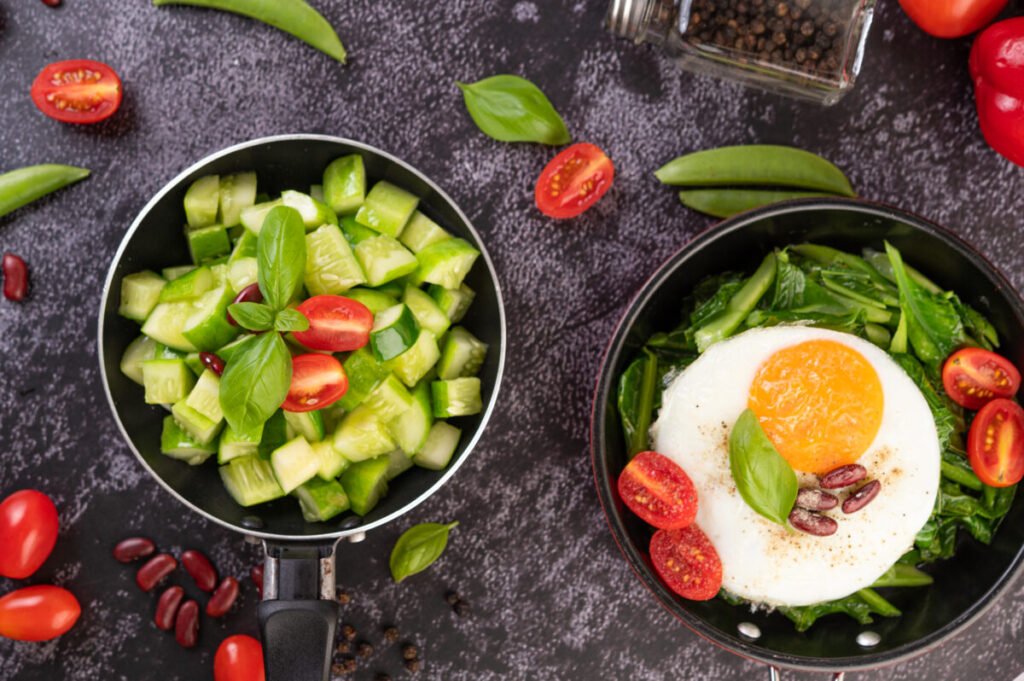
Hard-Boiled Egg and Vegetable Plate (120 calories): 1 hard-boiled egg with unlimited cucumber, cherry tomatoes, bell pepper strips, and celery sticks.
Season with salt, pepper, and a squeeze of lemon.
Egg Drop Vegetable Soup (100 calories per serving): Low-sodium broth with bok choy, mushrooms, carrots, and egg ribbons.
Add ginger and garlic for flavor without calories.
Will Eating Egg Salad Help You Lose Weight?
Yes, eating egg salad can definitely help you lose weight, but it depends on how you prepare it and what you eat with it.
A properly prepared egg salad using Greek yogurt or light mayo, extra egg whites, and plenty of vegetables can be a powerful weight loss tool.
Egg salad helps with weight loss because:
The high protein content keeps you feeling full for 3-4 hours, preventing snacking and reducing overall calorie intake.
It’s portable and convenient, making it easy to stick to your diet even when busy.
It can be prepared in advance for the entire week, ensuring you always have a healthy option available.
It provides essential nutrients that support metabolism and energy levels during calorie restriction.
However, traditional egg salad made with full-fat mayonnaise and served on white bread with chips can actually sabotage weight loss efforts.
The key is preparation method and portion control.
How Many Calories Are in an Egg Salad?
The calorie content of egg salad varies dramatically depending on how it’s prepared:
Traditional Egg Salad: Made with 4 whole eggs, 1/4 cup regular mayonnaise, and seasonings, contains approximately 400-500 calories per serving.
Light Egg Salad: Made with 4 whole eggs, 2 tablespoons light mayo, and 2 tablespoons Greek yogurt contains approximately 280-320 calories per serving.
High-Protein Low-Fat Egg Salad: Made with 6 eggs (discarding 3 yolks), Greek yogurt, mustard, and vegetables, contains approximately 220-260 calories per serving.
For weight loss purposes, aim for egg salad preparations that provide 200-300 calories per serving with at least 20 grams of protein.
This ensures you’re getting enough protein to feel satisfied without consuming excessive calories.
Which Type of Salad is Best for Weight Loss?
While this article focuses on egg salad, understanding how it compares to other salads helps you make the best choice:
Egg Salad: Provides 15-20 grams of protein per serving, making it one of the most satisfying salad options.
The protein keeps you full longer than most other salad types.
Chicken Salad: Similar protein content to egg salad but often prepared with more mayonnaise, potentially increasing calories.
Tuna Salad: Excellent protein source like egg salad, with the added benefit of omega-3 fatty acids.
However, concerns about mercury limit how often you should eat it.
Garden Salad: Very low in calories but also low in protein, meaning you may feel hungry soon after eating.
For weight loss, protein-rich salads like egg salad, chicken salad, and tuna salad are generally more effective than vegetable-only salads because they provide better satiety and help preserve muscle mass during calorie restriction.
The best approach is to combine protein-rich egg salad with plenty of fresh vegetables for a balanced, filling meal.
Is the Egg Diet Good for Weight Loss?
Short-term egg diets, where eggs form a major part of your daily food intake, can be effective for quick weight loss.
However, they should be approached with caution and ideally under professional guidance.
Benefits of Egg-Based Diets:
Rapid initial weight loss due to high protein intake and calorie restriction.
Reduced hunger compared to low-protein diets.
Simple meal planning with minimal preparation required.
Affordable compared to many other specialized diet plans.
Preservation of muscle mass due to adequate protein intake.
Potential Drawbacks:
Can be monotonous and difficult to sustain long-term.
May lack variety in nutrients if not properly planned.
Some people may experience digestive discomfort with very high egg intake.
Not suitable for people with egg allergies or certain health conditions.
The Verdict:
Egg-based diets can be effective for short-term weight loss (2-4 weeks), but they work best when:
Combined with plenty of vegetables and some whole grains for balanced nutrition.
Limited to 2-3 whole eggs per day, plus additional egg whites if desired.
Used as a jumpstart before transitioning to a more varied, sustainable eating plan.
Monitored by a healthcare provider, especially if you have any health concerns.
The most successful approach is to incorporate eggs as a regular part of a balanced, calorie-controlled diet, rather than relying on them exclusively.
Final Tips for Egg-Powered Weight Loss
To get the best results, keep these essential strategies in mind:
Track Progress: Look beyond the scale. Pay attention to your energy levels and how your clothes fit as your body transforms.
Cook Healthy: Stick to boiling, poaching, or scrambling with minimal oil. Avoid heavy butter, cream, or processed meats.
Balance Your Plate: Always pair eggs with vegetables and a small portion of healthy fats or whole grains for a complete meal.
Watch Portions: Stick to 2–3 whole eggs daily. If you need more protein, add extra egg whites to keep calories low.
Quality & Flavor: Choose organic, free-range eggs when possible. Use herbs, spices, and salsa instead of salt or cheese to keep things exciting.
Plan Ahead: Meal prep hard-boiled eggs or egg muffins on Sundays to avoid impulsive, unhealthy snacking during the week.
Stay Hydrated: Drink plenty of water. High-protein diets require proper hydration to support digestion and energy.
Exercise & Recovery: Use the high-quality protein in eggs to help your muscles recover after a workout, which keeps your metabolism high.
Conclusion: Your Egg-Powered Weight Loss Journey Starts Now
Eggs are undeniably one of nature’s most powerful tools for weight loss. When consumed correctly, they provide the high-quality protein needed to keep you full and protect your muscles while you lose fat.
The Science is Clear: Research shows that eggs do not cause weight gain in healthy individuals. In fact, eating 2–3 eggs daily—especially for breakfast—can lead to significantly more weight loss than eating carbohydrate-heavy meals.
Your Roadmap to Success
- Pick Your Style: Whether you prefer whole eggs for nutrition or whites for lower calories, make them your ally.
- Preparation Matters: Stick to healthy methods like boiling, poaching, or making veggie-filled frittatas.
- Consistency over Perfection: Sustainable weight loss is about making better choices every single day.
Take Action Today
The journey to your ideal weight doesn’t have to be tasteless or complicated. With eggs as your foundation, you have a versatile and affordable superfood supporting you.
Track Results: Stick with it for two weeks and watch your energy rise as the pounds come off.
Prep Ahead: Hard-boil a dozen eggs tonight for easy snacks this week.
Try a Recipe: Pick one of the eight healthy recipes from this guide (like the Indian-style Egg Bhurji or Veggie Omelet).